Africlime
Senator Natasha Akpoti: Eyes on the Future
Intro:
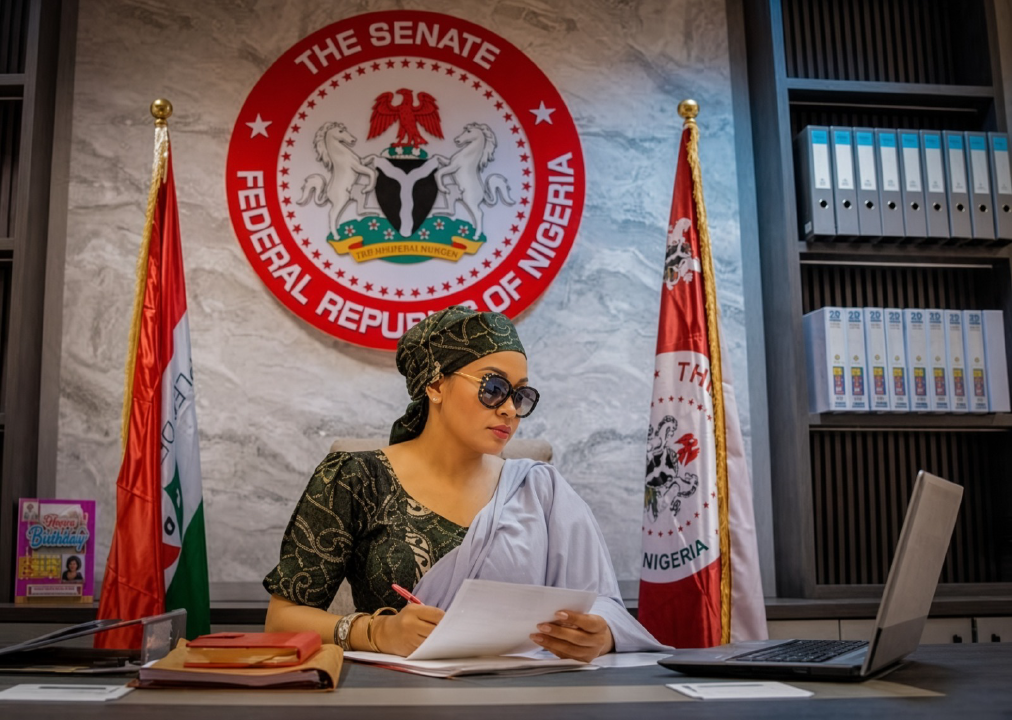
Senator Natasha Akpoti-Uduaghan is a Nigerian politician, entrepreneur, lawyer, and philanthropist. She holds a Bachelor’s Degree in Law from the University of Abuja, and a Masters of Business Administration degree from the University of Dundee. She has led several advocacies for the resuscitation of Nigeria’s Steel sector and as part of efforts to advance indigenous technology, set up a Builders Hub Impact Investment Programme (BHiiP) as part of Nigeria’s first integrated technology development and business growth hub.
Senator Akpoti-Uduaghan is currently representing Kogi Central Senatorial District in the Nigerian Senate.
Committed to preparing her people for the future, she is championing the infusion of contemporary educational measures and climate resilience in her constituency.
In this interview, she talks about her vision; projects; and why it is important for climate action to be seen as development action.
Excerpts
Most of your projects and engagements appear to be driven by a futuristic vision. Why is this so?
Senator Natasha Akpoti-Uduaghan: That, to me, is the essence of leadership. A leader must understand today’s realities while preparing people for tomorrow. Leadership requires listening to the people, studying emerging trends and translating both into a clear and practical vision.
I was fortunate to be mentored by visionary leaders, particularly my late father, who taught me that true leadership is not merely about solving today’s problems, but preventing tomorrow’s.
As a woman and a mother, I naturally think about what we are leaving behind for our children. That is why I prioritise ICT-powered education, healthcare, modern markets, business empowerment with drones and sustainable livelihoods. Each intervention addresses an immediate need while preparing my constituents for a rapidly changing world.
⸻
Apart from your ICT and educational interventions, you have increasingly focused on climate action and sustainable development. Can you take us through some of these projects and the vision behind them?
Senator Natasha Akpoti-Uduaghan: My approach is simple: climate action must improve people’s daily lives. It cannot remain an abstract international conversation.
We have installed solar-powered streetlights, solar -powered water projects, and provided solar energy for schools and health facilities. These interventions bridge the power gap, improve public services and enhance security in our communities.
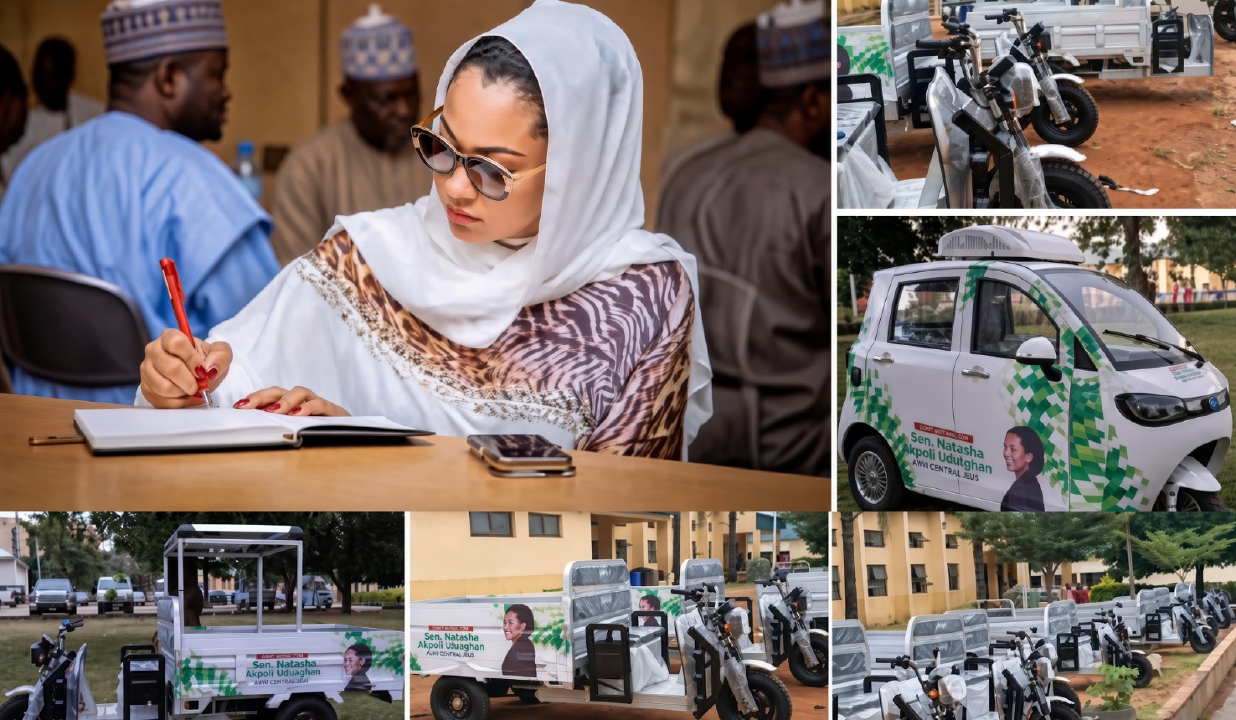
We have also provided farmers and transporters with electric tricycles and minitrucks. These vehicles help them reach their farms and transport produce to markets while gradually reducing emissions within Kogi Central.
Currently, we are distributing an initial 10,000 seedlings of economic trees, alongside support for planting and nurturing them. These trees will generate income, absorb greenhouse gases, provide shade, reduce erosion and flooding, and preserve indigenous fruits and species for future generations.
For me, sustainability is stewardship: caring for our people, our land and the generations yet unborn.
⸻
You sound deeply involved in the United Nations climate-change process. Have you participated in the UNFCCC processes?
Senator Natasha Akpoti-Uduaghan: I have not yet participated physically, although I have received invitations to some parliamentary engagements, often too late to accommodate them. Perhaps those invitations indicate that the international community is beginning to notice the work we are doing.
Nevertheless, I follow the UNFCCC process closely. I am a voracious reader and make a conscious effort to understand global developments and their implications for Nigeria and emerging economies.
I intend to participate in COP31. It will be an opportunity to engage legislators from around the world and advance a conversation that connects climate action with development, livelihoods and social justice.
⸻
Many believe that parliamentarians are critical to moving climate commitments from conversation to implementation. Do you agree?
Senator Natasha Akpoti-Uduaghan: Absolutely. International commitments mean very little without domestic implementation.
Legislators make laws, appropriate public funds and exercise oversight over government institutions and, where necessary, private-sector activities. We provide the legal and institutional foundations upon which climate commitments must stand.
We are also closest to the people through our constituencies. We can translate complex global agreements into practical local action, bring information and opportunities closer to communities, and ensure that policies reflect the realities of ordinary citizens.
Parliamentarians are therefore not peripheral to climate action; we are central to its success.
⸻
Nigeria has committed to achieving net-zero emissions by 2060. Do you believe this is achievable, and what role can legislators play?
Senator Natasha Akpoti-Uduaghan: It is achievable, but we must be realistic and deliberate. Nigeria still depends heavily on fossil-fuel revenues. Our transition must therefore be carefully managed, economically responsible and socially just.
The world is gradually moving towards cleaner energy. If our major markets transition away from fossil fuels, we must ensure that Nigeria is not left with stranded assets and diminished revenues. Economic diversification is no longer optional; it is a national imperative.
The transition also presents enormous opportunities. Renewable energy and decentralised power systems can help address our electricity deficit. Cleaner transportation, climate-smart agriculture and sustainable industries can create jobs, attract investment and improve lives.
However, climate justice must remain central. Nigeria did not create the greater part of the historical emissions driving this crisis. Developed countries must honour their obligations by providing adequate climate finance, technology and capacity-building support.
Our transition must also protect vulnerable communities and workers whose livelihoods may be affected. As legislators, our responsibility is to interrogate these issues and provide the legal, financial and oversight framework necessary to ensure that the transition benefits, rather than burdens, our people.
⸻
The transition will require significant funding. What are your recommendations?
Senator Natasha Akpoti-Uduaghan: Climate finance must be fair, accessible and equitable. Developed countries must fulfil their commitments, while emerging economies must create transparent, stable and investment-friendly environments.
Legislators have an important role in establishing credible laws, strengthening institutions and ensuring accountability. Government, the private sector, development partners and communities must each play their part.
No single action will take us to the finish line, but consistent and coordinated actions will.
⸻
What are your plans for the future?
Senator Natasha Akpoti-Uduaghan: To do more for my people and to remain faithful to the vision while continually refining it to meet changing realities.
On climate action and sustainable development, I am only getting started. I will continue to pursue initiatives that serve my constituents, strengthen Nigeria and contribute meaningfully to the world.
As a mother, a woman and a leader, I believe development must nurture, protect and empower. Climate action must therefore intersect with the urgent developmental needs of emerging economies. It must put food on tables, create opportunities, strengthen communities and leave a healthier planet for our children.
⸻
Thank you for making time to speak with us.
Senator Natasha Akpoti-Uduaghan: It has been my pleasure.